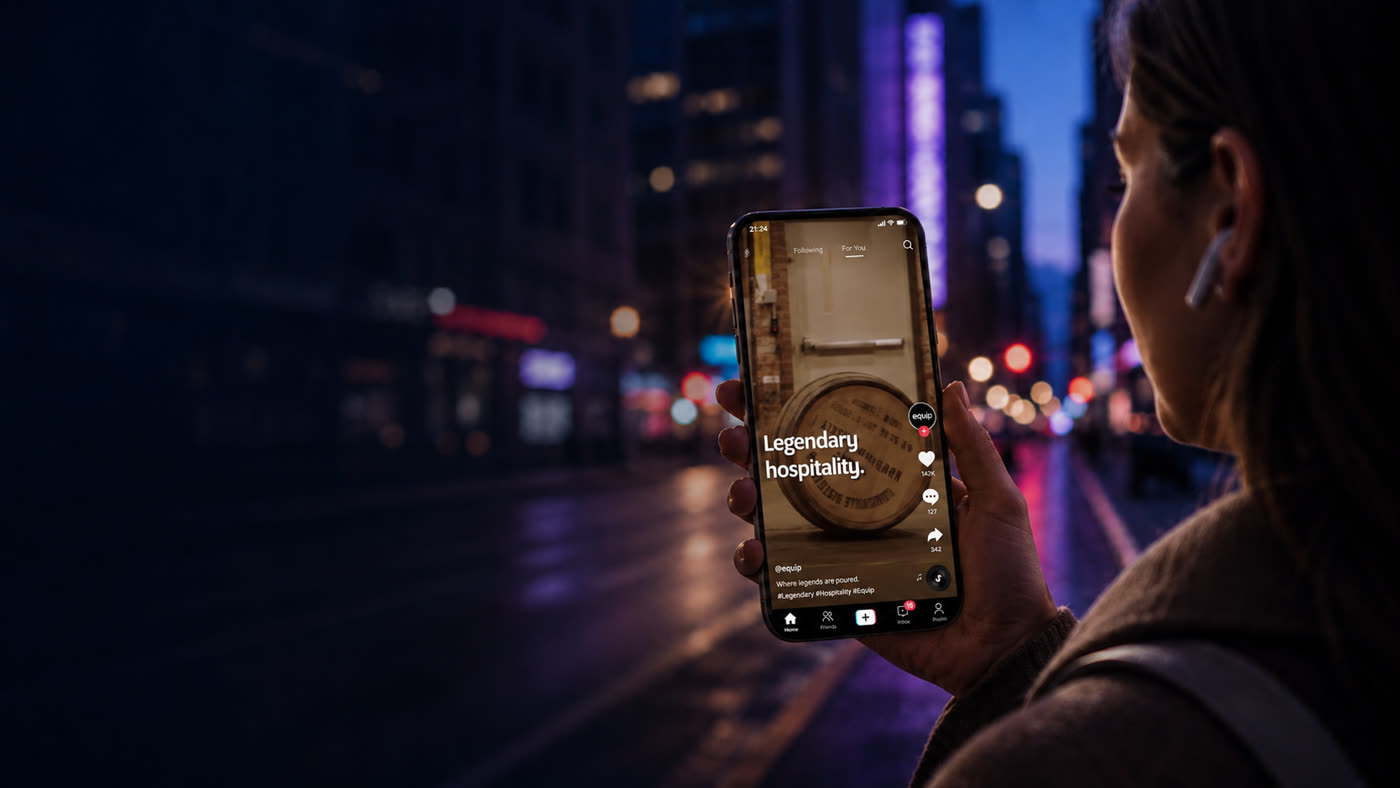
Think about the last video that stopped your scroll in an airport, or a waiting room, or an open-plan office. It didn’t blast sound at everyone around you. It played silently, because that is the default.
The large majority of short-form social video is watched with the sound off. Which means that for every ten people who watch your video, most of them will not hear a word of it. Captions are what close that gap. Here are three reasons to stop treating them as an afterthought.
1. They lift completion rates
A widely cited study of more than 5,000 U.S. viewers aged 18–54 found that people overwhelmingly watch video without sound in public places, and a substantial share do so in private too. The headline finding: viewers said they were significantly more likely to finish a video when it was captioned. Half of respondents said subtitles mattered specifically because they habitually keep the sound off.
The practical version: an uncaptioned video is asking a silent viewer to guess. Most of them won’t. They’ll scroll.
2. They improve search
A caption file is text, and text is the thing search engines can actually read. Captions give a search engine a transcript to match against a query, which makes your video more likely to surface, and gives the engine more evidence that the video is relevant to the topic. Captions aren’t only an accessibility feature and an engagement feature; they’re also the only part of your video that is legible to a crawler.
3. Some people cannot watch without them
This is the reason that should have come first.
Deaf and hard-of-hearing viewers. Captions are the video. Without them, dialogue, information, and context are simply unavailable. Good captions also describe meaningful non-speech audio (a door slamming, the music turning), because that carries meaning too.
Viewers who process written language more easily than speech. For some people with cognitive or learning disabilities, reading along is what makes the content usable.
Viewers watching in a second language. Captions let someone read along at their own pace, which is often the difference between following your video and abandoning it.
One correction worth making, because it’s a common mix-up: captions do not serve blind and low-vision viewers. They can’t be read. What serves those viewers is audio description, a separate track that narrates what’s happening on screen. If accessibility is the goal, captions are half the job; audio description is the other half.
Captions cost very little and they are the highest-leverage thing you can add to a finished video. There is no good argument left for skipping them.