LED wall vs. location shoot: which is right for your production?
August 16, 2026 · Chronicle Cinema Staff · 6 min read
How do you shoot courthouse steps, a car wreck, a haunted mansion, and a hospital room in the same day?
That was a real call sheet last week: one day at Studio C with Isaacs & Isaacs, four worlds, zero company moves. Until recently, the answer anywhere near Louisville was: you don’t. The LED wall isn’t magic, and it doesn’t replace real places. But it’s a tool our region has never had before, and it changes which schedules are possible. So when clients ask us the question we now hear most, wall or location, the honest answer is that each one wins in different situations. After twelve years of producing both kinds of shoots, we can tell you exactly which situations those are.
The short answer
Choose an LED wall when your story needs multiple places, controlled conditions, or a world that doesn’t exist, and your schedule or budget can’t absorb travel and weather risk. Choose a location when the place itself is the story: real architecture, real crowds, real light that an audience would feel the absence of. Many of our best projects use both.
What virtual production actually is
If you’ve seen The Mandalorian, you’ve seen the technique. It was the first major show built around an LED volume: a wall of high-resolution screens displaying a photoreal environment behind the talent, in camera, in real time. What started as a Star Wars production tool has since spread through features, commercials, and music videos, and Studio C brings that same technology to our region.
It isn’t a green screen, and the difference matters. There’s no keying, no green spill contaminating hair and edges, and no guessing what the background will look like in post. Your talent performs inside the world instead of in front of a void, so eyelines and reactions come naturally. And the light from the wall wraps your subject in the scene’s own glow, which is a big part of why the results read as real.
Practically, that means six things for a producer:
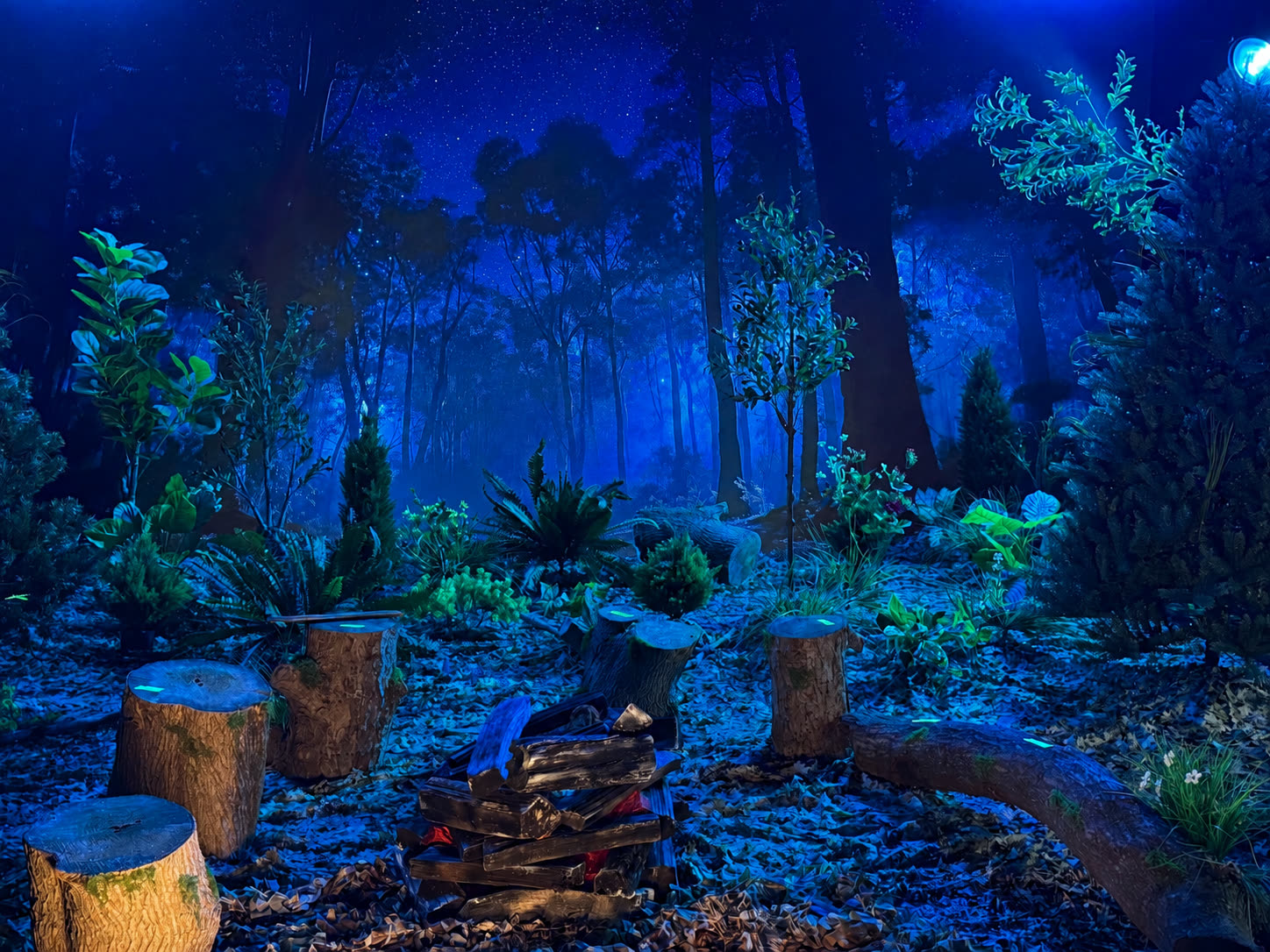
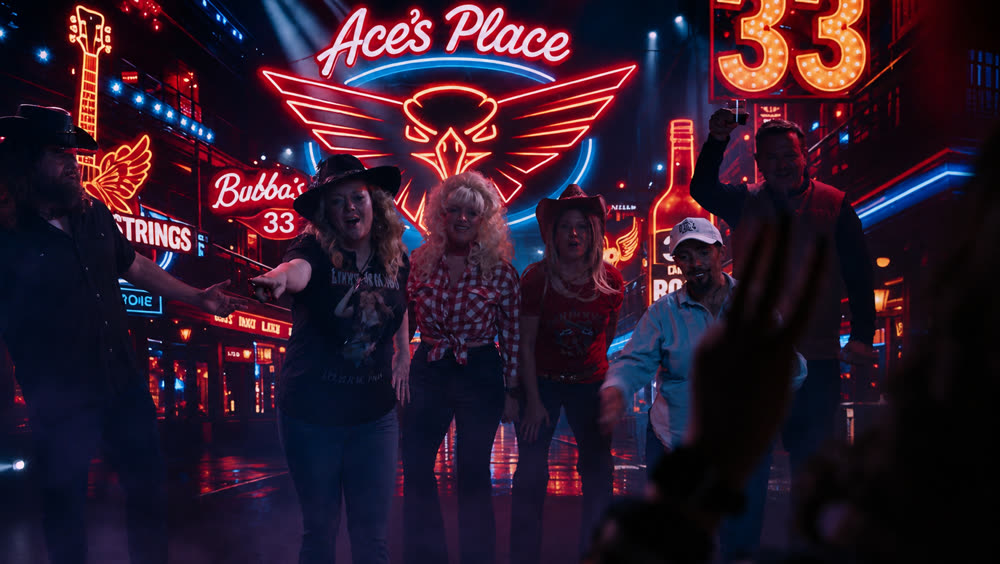
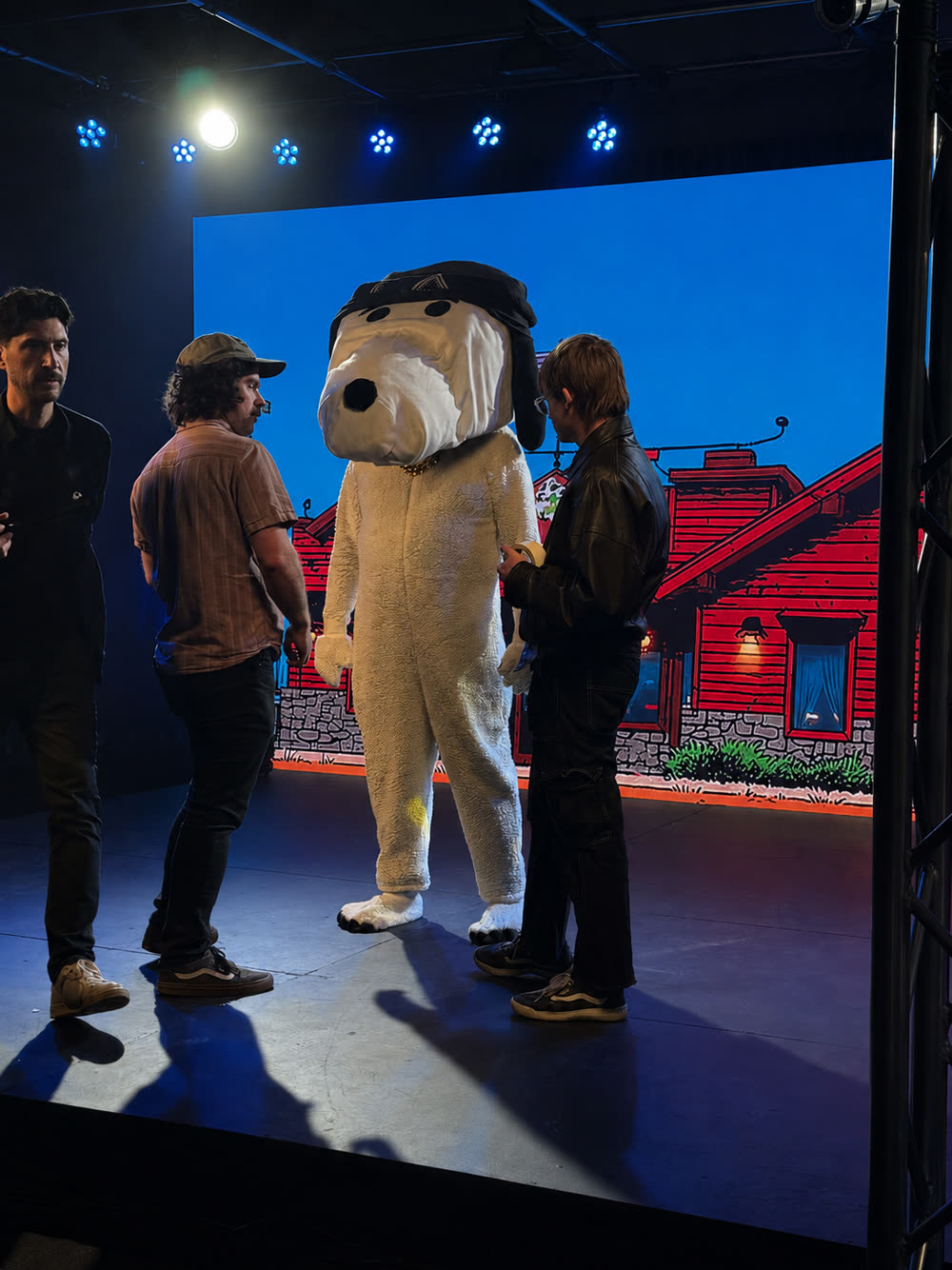
Travel collapses to zero. When Texas Roadhouse needed a night forest, a game-show set, and a Nashville bar, we built all three worlds on the wall and shot them back to back. Same stage, same crew, same day. When Darryl Isaacs needed to go from courthouse steps to a car wreck to a haunted mansion, the moves between worlds took minutes, not company moves. The point: the more places your story needs, the more the wall earns. Multi-world briefs are exactly what the volume was built for.
One brief, three worlds: the bar environment built for Texas Roadhouse, ready on the wall between the forest and the game-show set.
Weather stops being a line item. No weather days, no golden hour that only lasts 40 minutes, no waiting for clouds. The sun sets when the director says it does, and it will pause mid-sunset for as many takes as the performance needs.
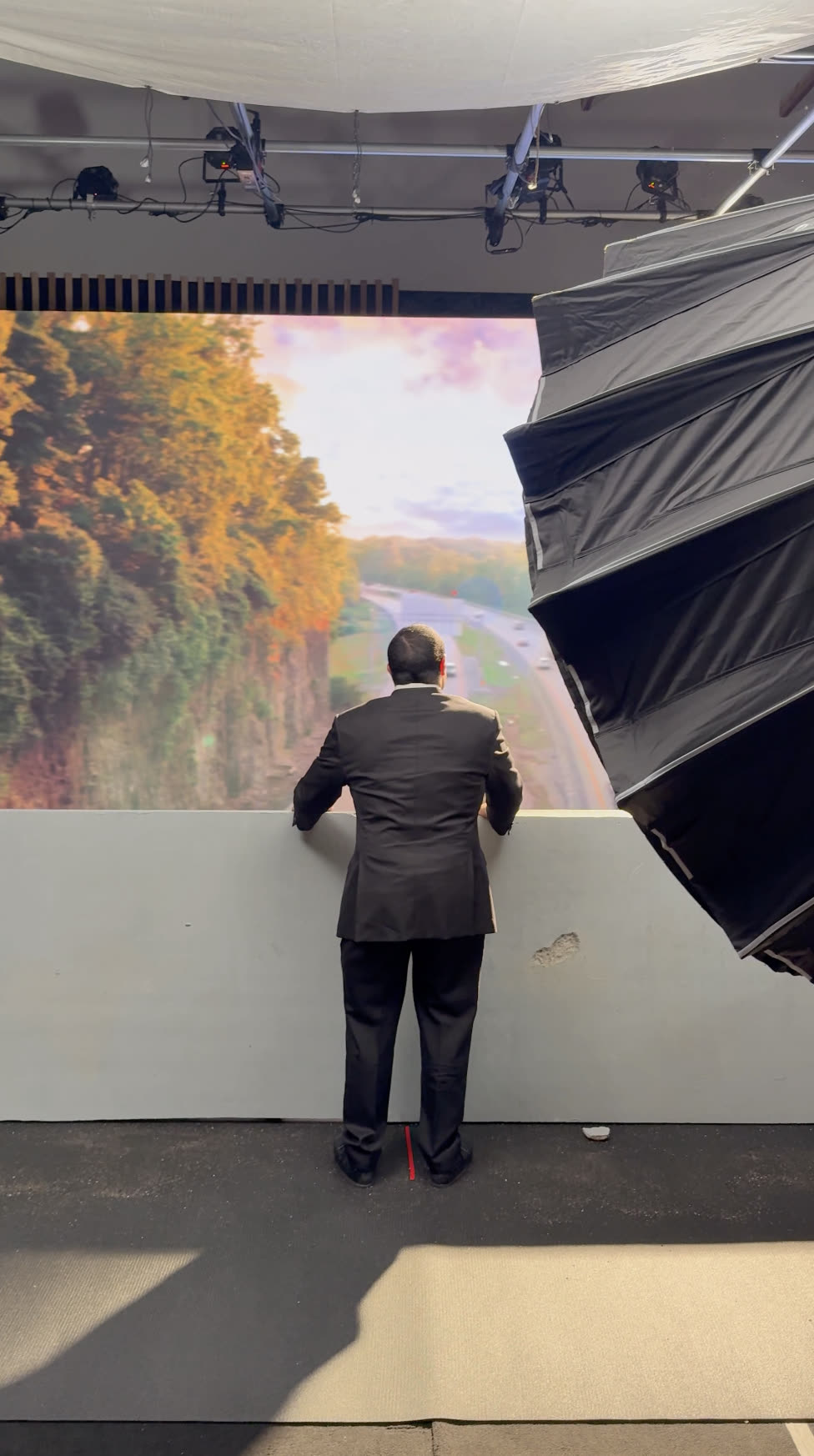
Resets are instant. Changing from a city street to a mountain overlook is a file load, not a company move. Company moves are where location days quietly die: every move costs you an hour or more of shooting light.
Reflections come free. This is the one green screen can never fake: chrome, glass, jewelry, a bottle, a car’s paint. Reflective surfaces pick up the world on the wall and carry it in-camera. It’s no accident the technique was pioneered for a show whose lead wears mirror-polished armor. On green screen those same surfaces reflect green, and every one becomes a cleanup shot.
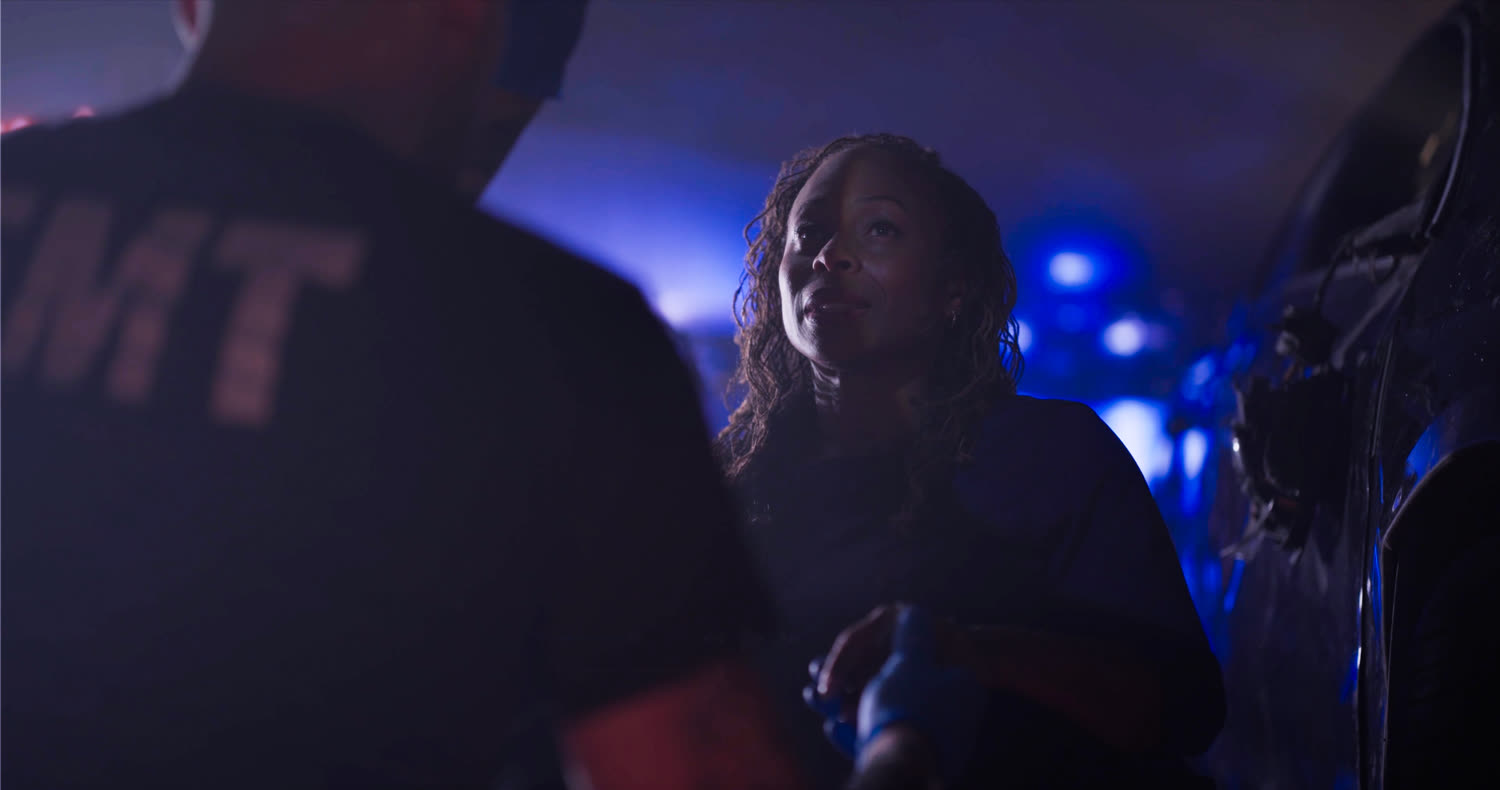
Driving scenes stop being a production. The car sits on the stage while the world streams past the windows, headlights rake the interior, and streetlight reflections slide across the hood, all real, all in-camera. No process trailer, no road closures, no insurance gymnastics, and your director can talk to the talent between every take.
Isaacs & Isaacs, “Are You Okay?”: a rain-slick highway wreck, shot in-camera on the wall. No road closure existed.
Legal and permits get simpler. Ever tried to permit a car wreck? No location agreements, no street closures, no crowd releases for passersby. For fast-turnaround commercial work with legal review, that matters more than people expect.
See it for yourself
Every frame below was shot in-camera on the Studio C wall. Drag the slider to watch the stage become the story.
On the stageFinal image
⇆ Drag to reveal the shot
More worlds built here
Neon roadhouse
Bubba’s 33
Live stage
Texas Roadhouse
Music video
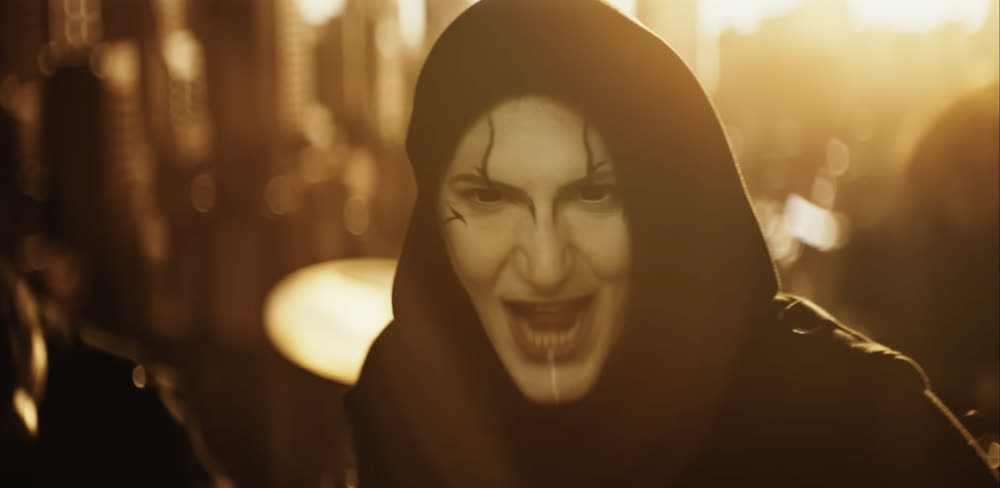
Motionless In White
Open highway
Isaacs & Isaacs
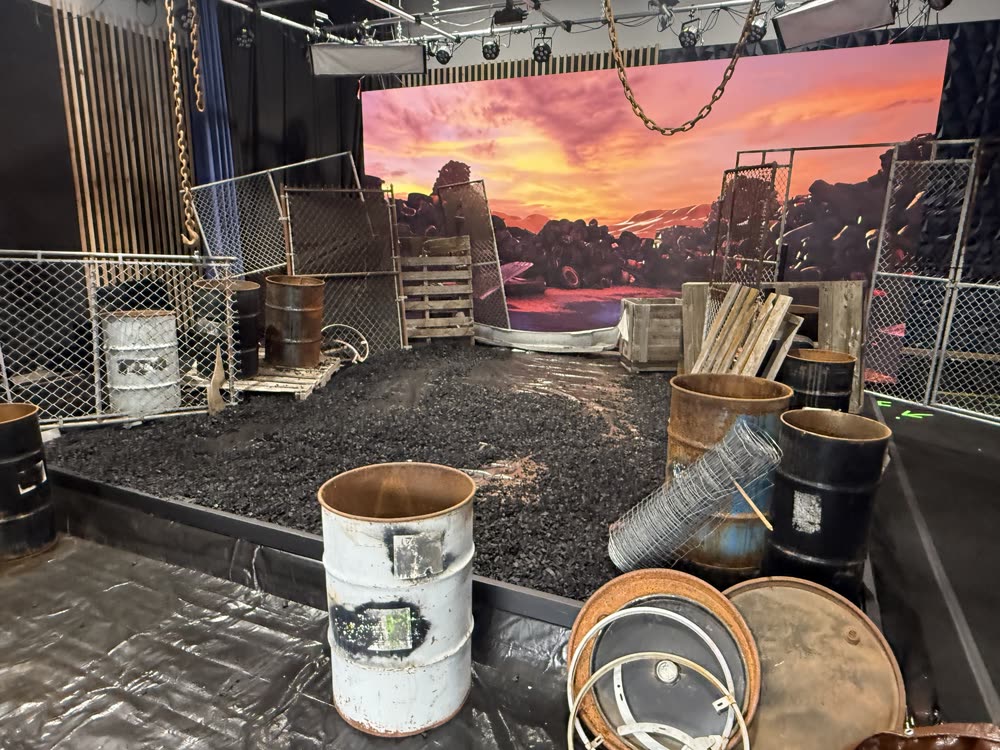
Desert junkyard
Music video
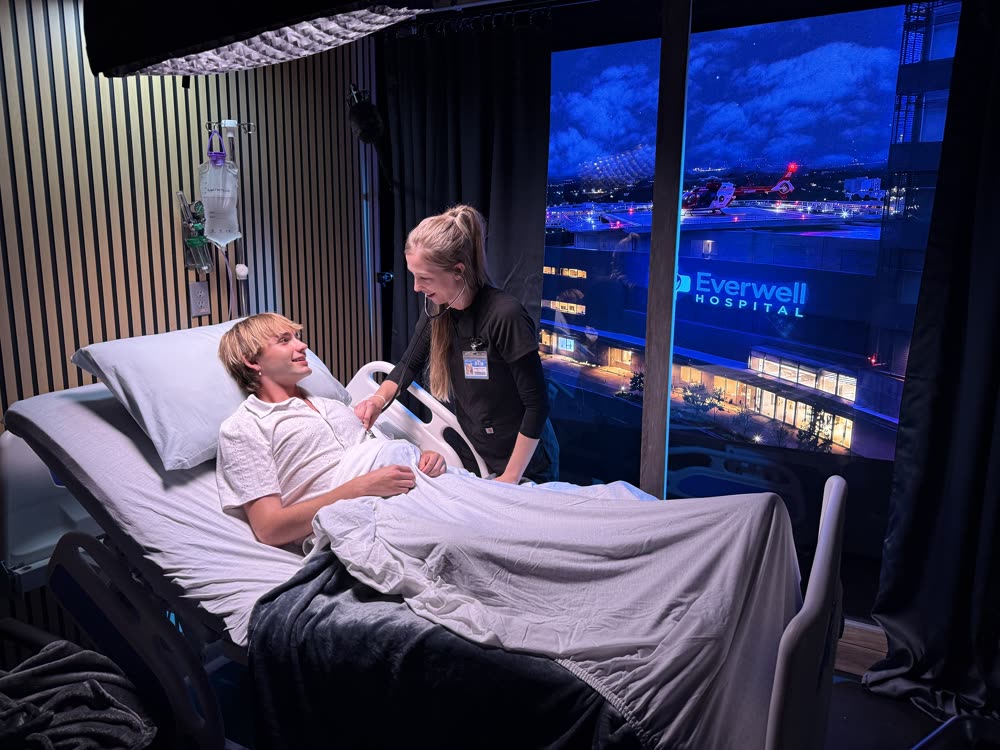
Hospital corridor
Standing set
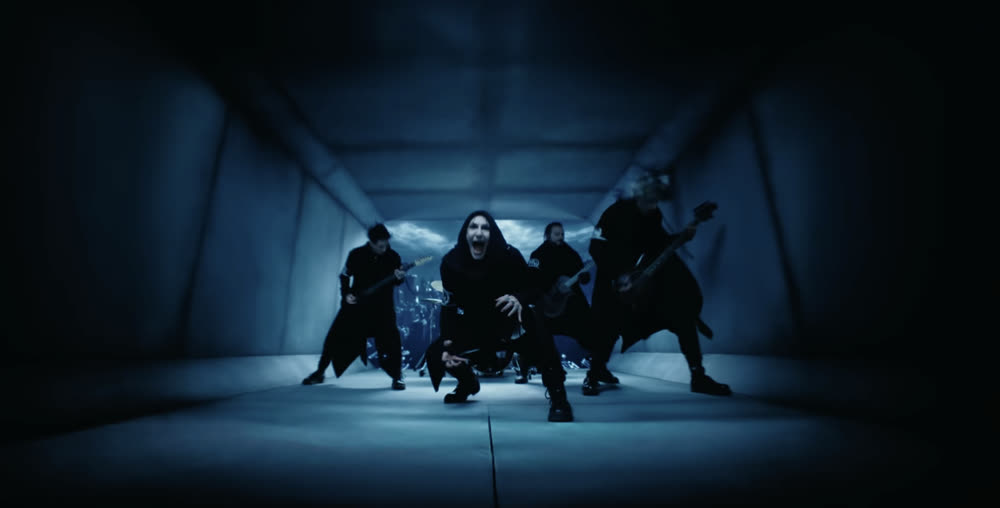
Moonlit gothic
Motionless in White
What’s next?
Your world, built here.
Bring a board, a script, or a rough idea. We build it on the wall.
What makes the wall look real (and what makes it look fake)
Here’s what nobody tells you: the wall gets you most of the way, and craft carries the rest. It’s where inexperienced volume shoots fall apart.
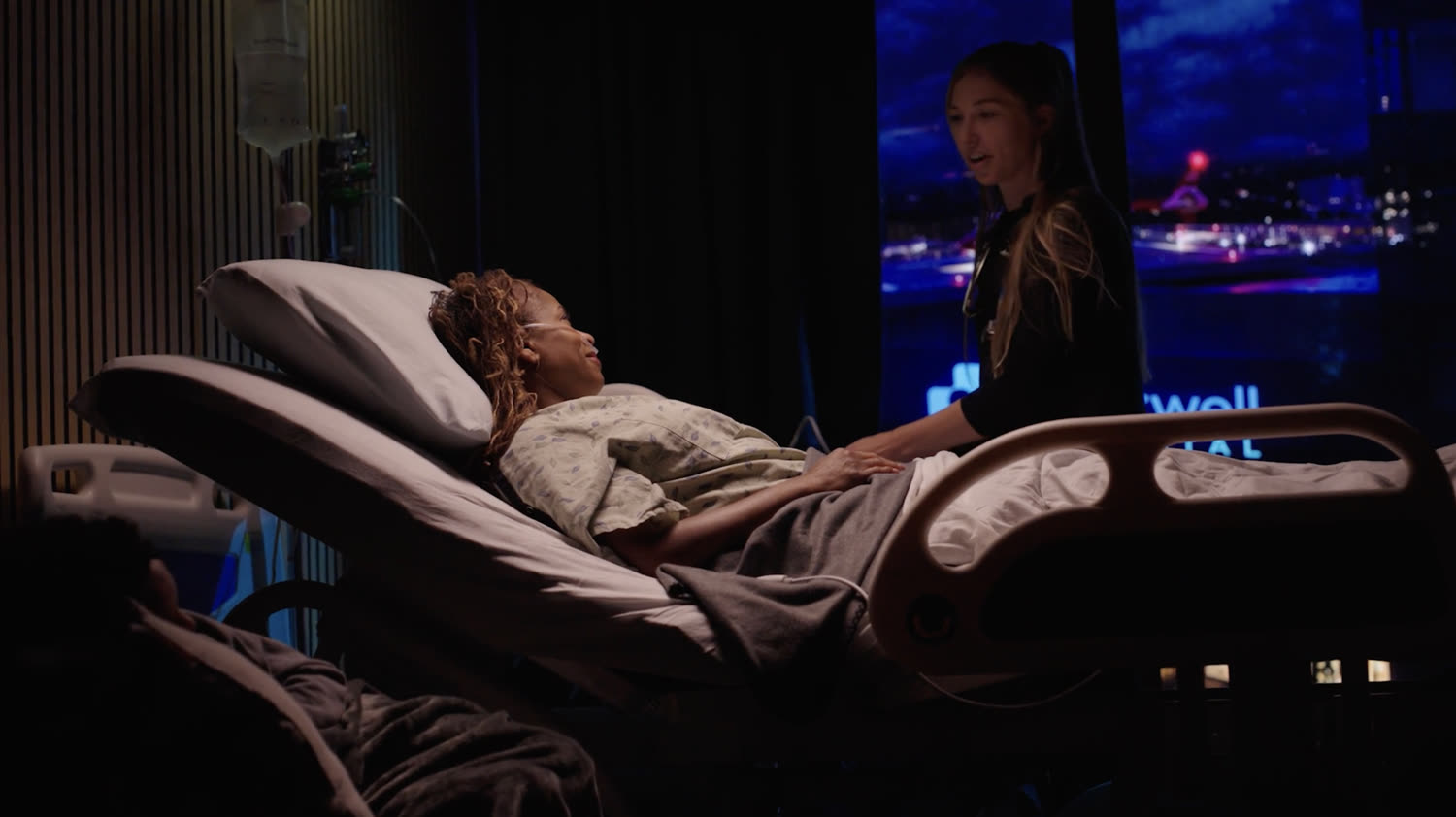
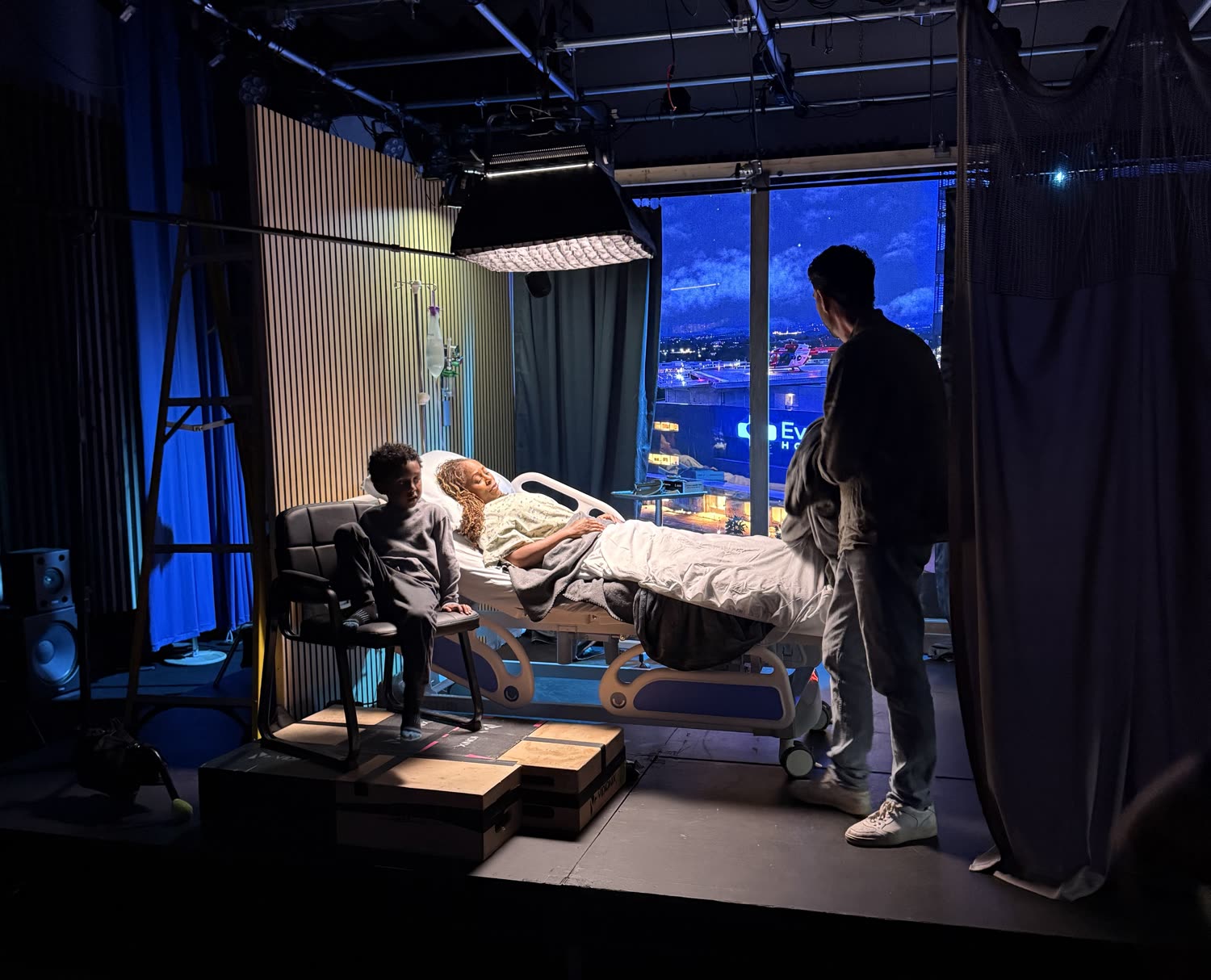
Physical set pieces sell the frame. The screen provides the world; real objects provide the proof. A hospital bed and an IV stand in front of a hospital environment, wet pavement and a crushed fender in front of a highway, real campfire logs in front of a night forest. Foreground props catch real light, cast real shadows, and give talent something to touch. Every convincing volume shot you’ve seen has practical pieces bridging the floor into the screen.
The seventy percent and the thirty: a hospital world on the wall, and a real bed, real floor, real props carrying the frame the rest of the way.
Lighting has to agree with the environment. The wall wraps your subject in the scene’s ambient glow, but your key light still has to match what the world implies: direction, color, and ratio. A sunset environment with a cool, flat key reads as a screen instantly. We light every setup to the world on the wall, not the other way around.
Pixel pitch decides how close you can get. Pitch is the spacing between LEDs, and it determines when the camera starts seeing the grid instead of the world (that’s the moiré shimmer you’ve seen on cheap walls). Studio C’s wall is a 1.9mm pitch, the industry standard for virtual production, fine enough for close work and shallow-focus shots that coarser event walls can’t survive.
Content quality is a budget line, not an afterthought. The environment on the wall is a produced asset. Great ones come from 3D scenes, high-resolution plates, or licensed worlds, and they deserve the same scrutiny as anything else in the frame.
What a location still does better
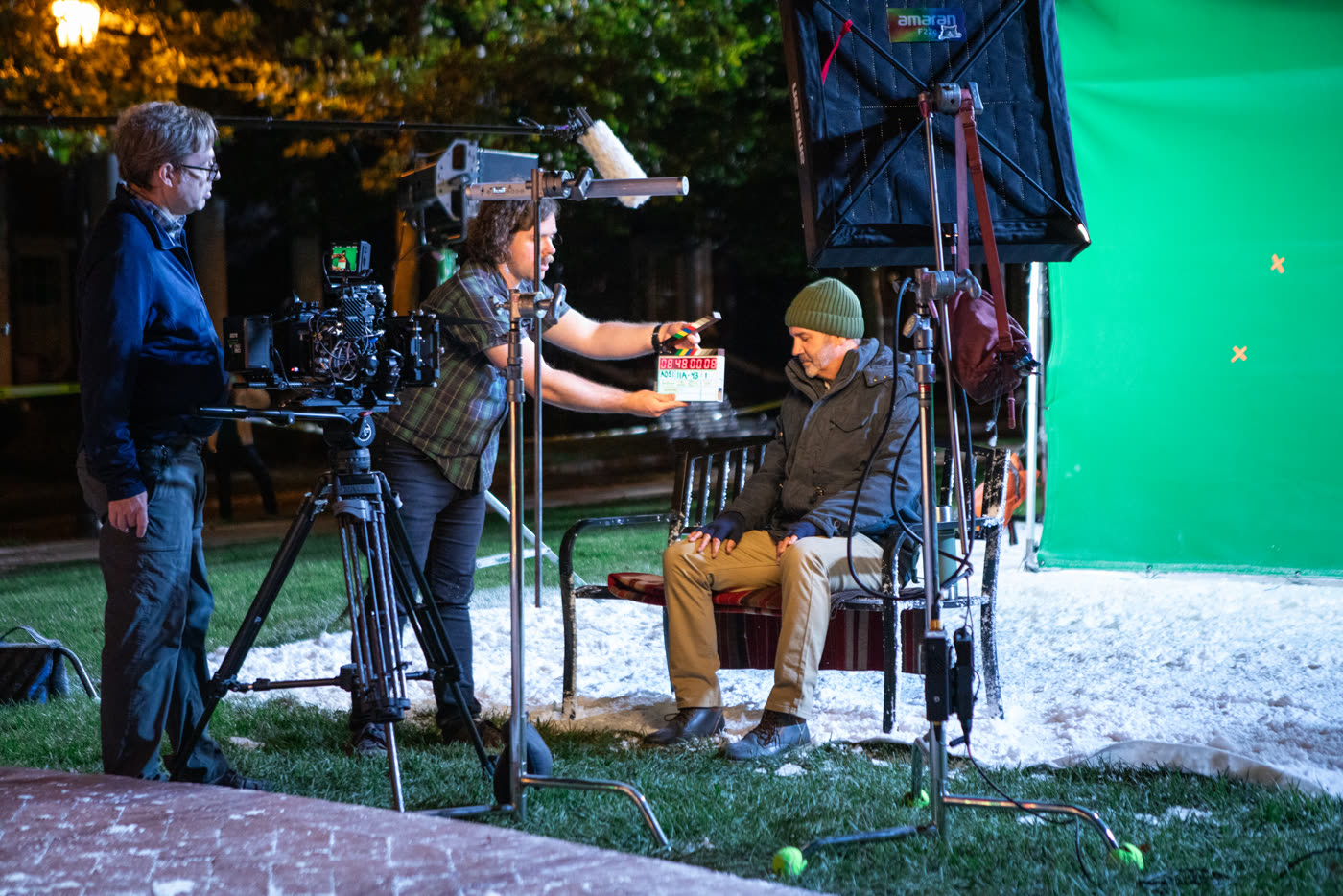
We operate an LED stage and we’ll still tell you: some stories have to be shot in the world. When Hallmark needed a snowy Christmas neighborhood, we built it practically, in a real Louisville neighborhood, in August, with an FX team blowing snow, because the campaign lived on the texture of a real street with hundreds of onlookers just out of frame. When Woodford Reserve needed an empty Churchill Downs, the emptiness of that real, 150,000-seat place was the story.
Hallmark’s Winter Walk: a real street, real snow machines, and an August heat index. Some frames have to be earned outside.
Locations win when you need scale, depth, and room: wide exteriors, big sets, crowds, and large camera moves that want real distance to travel through. They win when the venue itself carries meaning (a client’s facility, a landmark, a hometown), when documentary truth matters, or when the budget is small and one good real place is simply cheaper than building a world. The wall is the opposite tool: it’s built for hyper-controlled shots where control is everything and every element must be perfect, the frames that would be nearly impossible to get in the field.
The cost math, honestly
Neither approach is automatically cheaper. The money just moves. A location shoot spends on travel, lodging, location fees, permits, transport, weather contingency, and the schedule padding all of those force. An LED shoot spends on stage time and on creating or licensing the environments that go on the wall. The crossover point usually comes down to two questions: how many places does the story need, and how expensive is a lost day? One location, near home, forgiving schedule: location wins. Three or more environments, tight talent windows, national deadline: the wall usually wins before you even count the creative upside.
The technical fine print
For the producers and post supervisors: here’s the Studio C wall on paper.
LED Video Wall Specifications
Studio Cby Chronicle Cinema
Processor
Novastar MCTRL 4K LED Processor
Total resolution
3072 × 1536 pixels
Aspect ratio
2:1 (Ultrawide)
Pixel pitch
1.9mm Industry standard for virtual production; fine enough for close work without moiré.
Refresh rate
60Hz
Preferred codec
Resolume DXV3 (.mov)
Accepted alternates
Apple ProRes 422 or 4444
Frame rates
23.98 fps up to 60 fps
This is our standard setup; custom sizes and configurations are available upon request for specific projects. We recommend encoding final assets directly to DXV3 for immediate playback. Self-service: convert your files with the free Resolume Alley software. In-house: our team handles the conversion before your session; allow extra time for the process.
Questions we ask on every discovery call
How many distinct places does the story need? Who’s on camera, and what does a lost day cost with them? Does the audience need to feel a real place, or a controlled one? What’s the delivery date, and what happens if weather takes a day? Is there an existing brand environment (a store, a product world, a game) that could live on the wall? The answers usually make the choice for us.
Where we land
Studio C’s LED volume is the only one of its kind in the region. The technology that built The Mandalorian now lives at 140 Spring Street in Jeffersonville; the nearest comparable stages are roughly 175 miles away in Nashville and 210 in Columbus, and ours shares a roof with a full production company. That combination is the real answer to the “versus” question: we don’t sell you the wall or the location, we produce the project, and we’ve done it both ways enough times to know which one your story needs. Often it’s a hybrid: real exteriors for scale, the volume for everything dialogue-driven, controlled, or impossible.
Planning something and weighing the two? Tell us what you’re making and we’ll walk you through the math for your specific project, or come see the wall in person. And bring the impossible schedule. Courthouse, car wreck, haunted mansion, hospital: that one’s already been done. We’ll have you wrapped by dinner too.